
The coverage your homeowners policy does not include
Flood is excluded from every homeowners policy, in every zone. What matters is how much coverage you need and where to place it.
Rising water, storm surge, and groundwater are not covered by a homeowners policy anywhere in Florida. A home can be well insured against wind and completely uninsured against the water that arrives with the same storm. Flood is a separate policy, and the decisions inside it are worth understanding.
The parts that actually matter
Your flood zone is a starting point, not a verdict
Zone designation affects price and whether your lender requires coverage. It does not determine whether water can reach the house. A meaningful share of flood claims come from properties outside high-risk zones, where owners assumed the designation meant safety rather than a lower probability.
Elevation
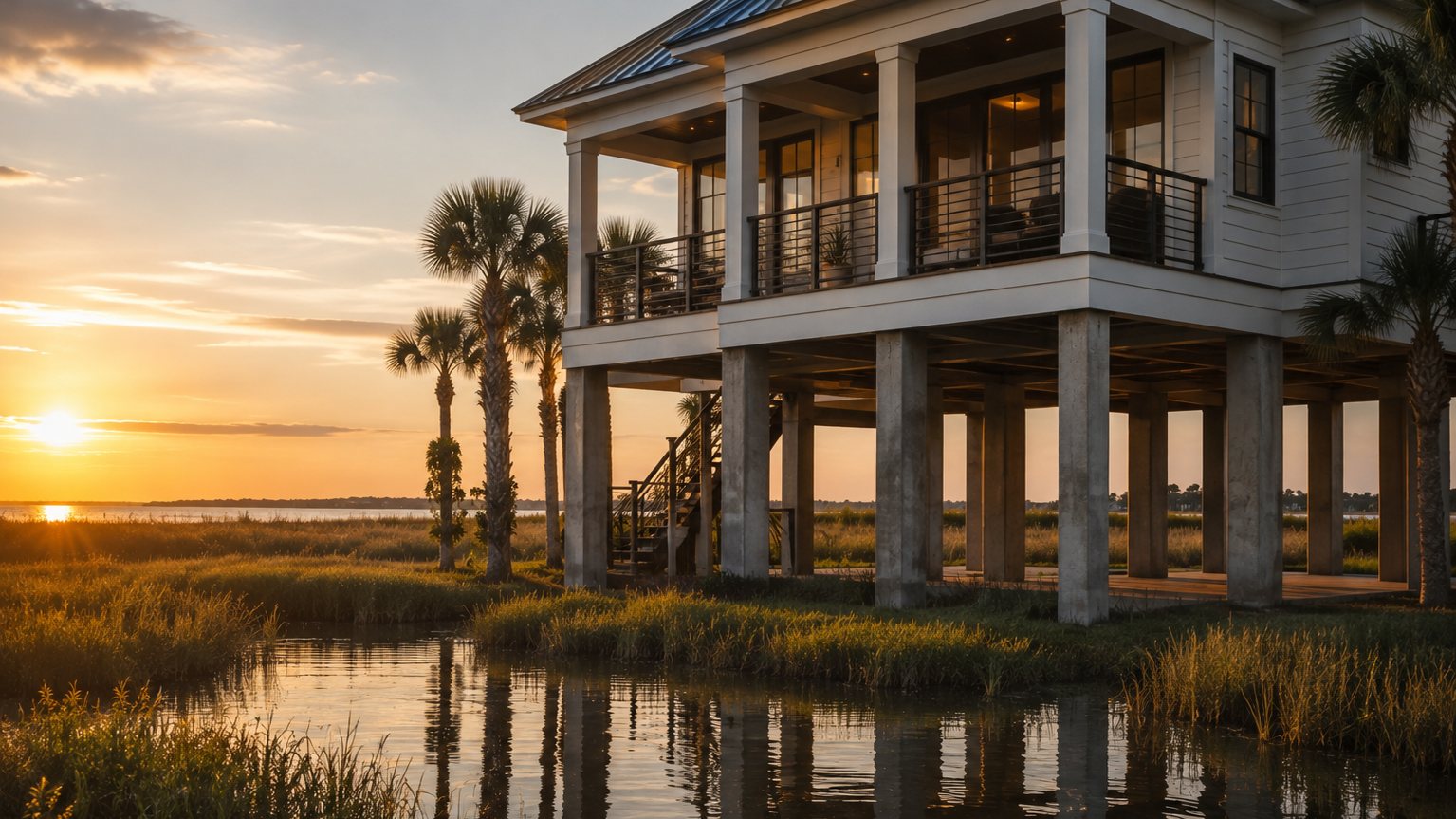
How high the lowest floor sits relative to the expected flood level is one of the strongest drivers of price on a flood policy. An elevation certificate documents this. For older homes, or homes where the certificate is missing, obtaining one can change the rating considerably — sometimes in your favor.
The NFIP has limits
The federal program caps building coverage at $250,000 and contents at $100,000 for a residential property. For a home worth well above that, the federal policy leaves a substantial gap. This is the single most common flood coverage shortfall we find on higher-value Florida homes.
The private market fills the gap
Private flood carriers write above the federal caps, often with broader terms and sometimes at a lower price. Whether the private market or the NFIP is the better placement depends on the property, the zone, and what you need covered. We look at both rather than defaulting to one.
Contents are not automatic
Building coverage and contents coverage are separate elections on a flood policy. It is possible to insure the structure and leave everything inside it uncovered. Basement and below-grade contents carry their own restrictions.
Waiting periods
Flood policies typically carry a 30-day waiting period before coverage begins. The waiting period is waived when the policy is purchased in connection with a new home purchase. Otherwise, coverage cannot be added once a storm is approaching, which is why flood is a decision to make in a quiet month rather than a busy one.
What we actually look at
We check whether your building and contents limits reflect what the property is worth rather than what the federal program happens to cap. We look at whether an elevation certificate exists and whether it is helping or hurting your rate. We compare the federal and private markets rather than assuming one is right. And we confirm the flood policy and the homeowners policy line up, so a single storm does not fall between them.
How this sits alongside your homeowners policy →Flood coverage, answered plainly
How long before flood coverage takes effect?
Flood policies typically carry a 30-day waiting period. The waiting period is waived when the policy is purchased in connection with a new home purchase, which means coverage can be in force at closing. Outside of a purchase, coverage cannot be added once a storm is approaching.
Is storm surge covered by my homeowners policy?
No. Storm surge is flood, and flood is excluded from every homeowners policy. This is the single most consequential gap after a Florida storm. Wind damage and the rain that enters through it are homeowners claims; water arriving from the ground is a flood claim.
What does a flood policy actually cover?
Structure and contents are covered separately, each with its own limit, and you choose whether to carry one or both. Contents coverage is not automatic. Owners who carry structure coverage alone sometimes discover after a loss that everything inside the house was uninsured.
My lender is not requiring flood insurance. Should I still consider it?
Lender requirement follows flood zone designation. Actual risk follows water, elevation, drainage, and rainfall, and those do not stop at a zone boundary. Not being required to carry coverage is a lending decision, not an assessment of whether your home can flood.
More on flood and storm exposure
Find out where you actually stand
No cost, no obligation, and no pressure to move anything.
Request a coverage review
4830 W Kennedy Blvd #600
Tampa, FL 33609
(813) 925-6000
Fax (813) 499-1980
Coverage descriptions on this site are general and do not amend or alter any policy. Availability, terms, and conditions vary and are subject to underwriting approval. Refer to the policy for complete details.